
 Language
  English
 Español
What Can PTFE Adhesive Tape Do That Other Tapes Simply Cannot?
News-What Is PTFE Adhesive Tape and What Makes It Different?
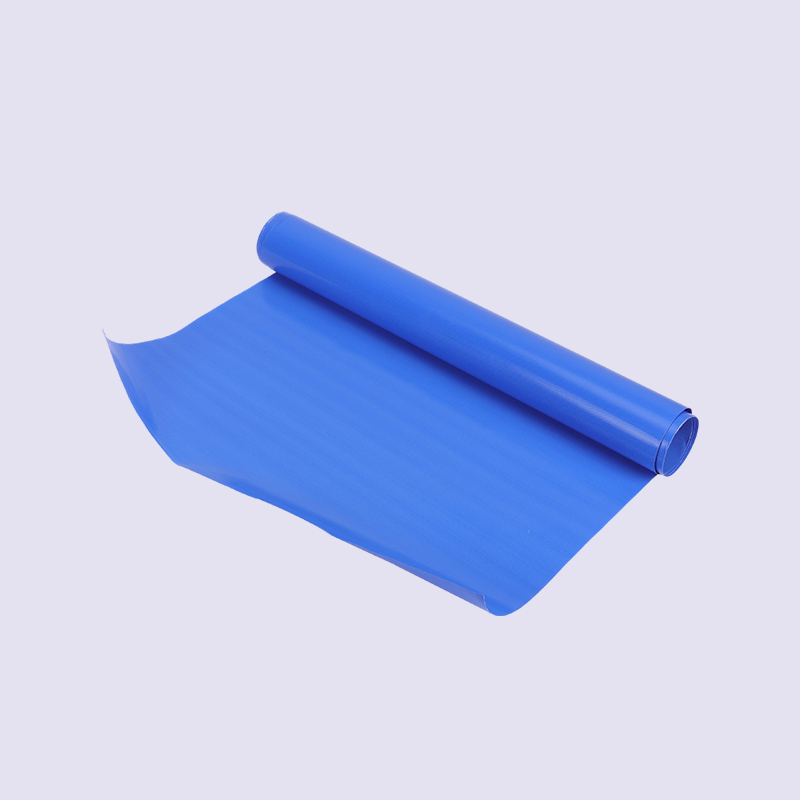
PTFE adhesive tape is a pressure-sensitive tape constructed from a base film or fabric of polytetrafluoroethylene — the fluoropolymer resin commercially known as Teflon — coated on one side with a high-performance silicone or acrylic adhesive. PTFE is one of the most chemically inert and thermally stable synthetic materials ever produced, and these properties carry directly into the adhesive tape products made from it. The result is a tape that can perform reliably in conditions that would destroy conventional polyester, polyimide, or rubber-based tapes within minutes — sustained temperatures exceeding 260°C, direct contact with concentrated acids, alkalis, and solvents, and applications where the tape surface must remain permanently non-stick regardless of repeated contact with adhesives, resins, or food products.
The adhesive layer on PTFE tape presents an interesting engineering challenge: bonding a pressure-sensitive adhesive to a material that is by definition non-adhesive. This is achieved through specialized surface treatment of the PTFE film or fabric — typically chemical etching or sodium naphthalene treatment of the bonding surface — which creates microscopic surface irregularities that allow the silicone adhesive to mechanically anchor to the PTFE without compromising the non-stick performance of the exposed face. The silicone adhesive is itself chosen for high-temperature resistance, ensuring that the adhesive bond remains functional at the same extreme temperatures that the PTFE face layer must withstand.
Types of PTFE Adhesive Tape and Their Constructions
PTFE adhesive tape is not a single product but a family of tape constructions, each engineered for a different balance of performance properties. The primary distinction is between film-based and glass fabric-based constructions, with further variation in thickness, adhesive type, and surface finish within each category.
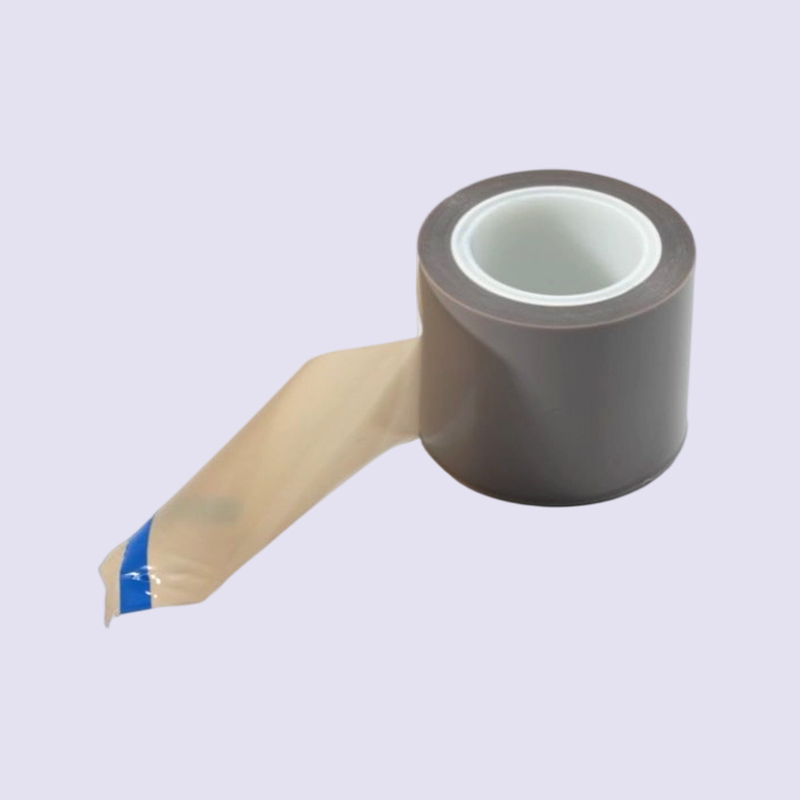
PTFE Film Tape (Skived Film)
Skived PTFE film tape is produced by shaving — skiving — a thin, uniform film from a solid billet of sintered PTFE resin. The resulting film is dense, smooth, dimensionally stable, and highly consistent in thickness. Skived PTFE film tapes are available in thicknesses ranging from approximately 0.08 mm to 0.50 mm and offer the best combination of chemical resistance, dielectric properties, and surface smoothness of any PTFE tape construction. The smooth surface finish makes skived film tape the preferred choice for applications requiring precise non-stick release performance — heat sealing jaws, packaging machine guides, and food processing conveyor components — where surface irregularities would impair release quality or trap contaminants.
PTFE Glass Fabric Tape (Woven Glass Fiber with PTFE Coating)
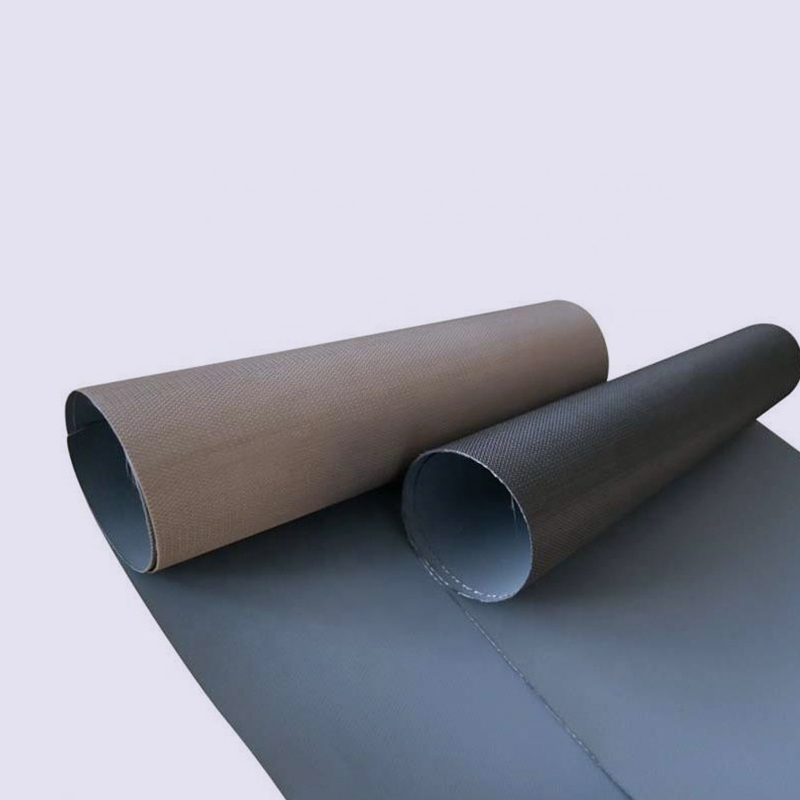
Glass fabric PTFE tape is manufactured by impregnating a woven fiberglass substrate with PTFE dispersion and sintering the assembly to produce a composite material that combines the mechanical strength of glass fiber with the chemical and thermal performance of PTFE. The resulting tape is significantly stronger in tension and tear resistance than skived film constructions, making it suitable for applications involving mechanical stress, abrasion, or wrapping over curved or irregular surfaces where a pure film tape would stretch or tear. Glass fabric PTFE tape is the standard choice for wrapping heat sealing bars, insulating heating elements, lining chutes and hoppers in bulk material handling, and protecting conveyor belts in food and pharmaceutical manufacturing environments.
PTFE Tape with Pressure-Sensitive Adhesive Liner
Most PTFE adhesive tapes are supplied with a silicone-coated release liner protecting the adhesive layer until application. The liner is peeled away immediately before the tape is applied to the substrate surface. Silicone adhesive is the standard choice for PTFE tape applications because of its thermal stability — silicone adhesives maintain their bonding performance from cryogenic temperatures up to 260°C continuously and up to 300°C for short exposures. Some specialist PTFE tape products use acrylic adhesives where higher initial tack or better performance on specific substrate materials is required at moderate temperatures, but silicone remains dominant for most industrial applications.
Key Performance Properties That Define PTFE Tape's Value
Understanding the specific performance properties of PTFE adhesive tape allows engineers and procurement specialists to assess whether it is the right solution for a given application — and to specify the correct grade when it is. The following properties are the most practically significant across the range of industrial applications where PTFE tape is used.
| Property | Typical Value / Range | Practical Significance |
| Continuous operating temperature | –70°C to +260°C | Survives industrial heat sealing and oven environments |
| Short-term peak temperature | Up to +300°C | Tolerates process temperature spikes |
| Coefficient of friction (surface) | 0.05 – 0.20 | One of the lowest of any solid material |
| Dielectric strength | 60 – 100 kV/mm | Electrical insulation in high-voltage applications |
| Chemical resistance | Resistant to virtually all chemicals | Suitable for aggressive process environments |
| Tensile strength (film grade) | 14 – 35 MPa | Adequate for most wrapping applications |
| Tensile strength (glass fabric) | 50 – 150 MPa | Mechanical durability for structural applications |
The combination of extremely low surface energy and near-universal chemical resistance means that PTFE adhesive tape surfaces resist adhesion from virtually all materials that contact them — including hot melt adhesives, epoxy resins, polyurethane foams, food products, and industrial lubricants. This property is intrinsic to the PTFE polymer itself and does not degrade with time, temperature cycling, or chemical exposure in the way that applied non-stick coatings and surface treatments inevitably do. A PTFE tape surface applied to a heat sealing jaw, for example, will maintain its release performance through hundreds of thousands of sealing cycles without any reapplication or retreatment.
Industrial Applications Where PTFE Adhesive Tape Is Most Widely Used
PTFE adhesive tape has established itself as an indispensable consumable in a wide range of manufacturing and processing industries. Its application range extends far beyond the plumbing thread-sealing use that many people associate with PTFE tape — the industrial adhesive-backed product is a technically sophisticated tool used in precision manufacturing environments worldwide.
Heat Sealing and Packaging Machinery
The most widespread industrial application for PTFE adhesive tape is the protection and non-stick lining of heat sealing jaws, impulse sealing bars, and hot plate surfaces in packaging machinery. In vertical and horizontal form fill seal machines, blister packing equipment, and pouch sealers, the sealing elements operate at temperatures of 150–220°C and must simultaneously apply high sealing pressure and release cleanly from the sealed film without sticking, tearing, or contaminating the seal. PTFE glass fabric tape applied to the sealing jaw face provides the thermal stability, non-stick release, and abrasion resistance required for reliable continuous operation. Tape thickness selection on sealing jaws must account for the thermal conductivity through the tape — thicker tape insulates the sealing element and may require higher jaw temperature settings to achieve equivalent seal strength.
Food Processing and Bakery Equipment
PTFE tape is widely used in commercial bakery ovens, food processing conveyors, and industrial cooking equipment to provide non-stick surfaces that are FDA-compliant, thermally stable through oven temperatures, and cleanable without chemical degradation. Conveyor belt support surfaces, oven rack guides, forming molds, and divider blades in bread and pastry production are typically lined with PTFE adhesive tape to prevent product sticking and facilitate cleaning. The tape's chemical inertness means that food-grade cleaning agents — including sodium hypochlorite sanitizers and alkaline CIP chemicals — do not degrade the tape material or compromise food safety through chemical contamination.
Electrical Insulation and Cable Wrapping
The outstanding dielectric properties of PTFE — dielectric constant of approximately 2.1, loss tangent below 0.0002, and dielectric strength of 60–100 kV/mm — make PTFE adhesive tape a premium electrical insulation material for high-frequency, high-voltage, and high-temperature electrical applications. It is used to wrap coil windings in transformers and electric motors operating in high-temperature environments, to insulate connections in high-voltage power equipment, and to protect signal cables in industrial environments where the insulation is exposed to chemicals or extreme temperatures that would degrade PVC or polyester insulation. PTFE tape maintains its dielectric properties across its full operational temperature range without the moisture absorption that degrades the insulation performance of some other dielectric films.
Chemical Processing and Pipe Protection
In chemical process plants, pharmaceutical manufacturing, and laboratory environments, PTFE adhesive tape is used to protect pipe flanges, valve stems, and vessel surfaces from chemical attack, to seal thread connections on fittings carrying aggressive chemicals, and to provide anti-corrosion wrapping on metallic components exposed to acidic or oxidizing atmospheres. Unlike polymer tapes based on polyester or polyimide, PTFE resists concentrated sulfuric acid, hydrofluoric acid, concentrated alkalis, strong oxidizers including fuming nitric acid, and virtually all organic solvents — the only common exceptions being molten alkali metals and elemental fluorine under extreme conditions. This near-universal chemical resistance makes PTFE tape the only viable tape solution for the most chemically aggressive process environments.
Composite Manufacturing and Mold Release
In aerospace composite manufacturing, wind turbine blade production, and custom composite fabrication, PTFE adhesive tape is applied to mold surfaces, caul plates, and tool edges to provide a clean release surface that prevents cured composite parts from bonding to the tooling. Compared to applied mold release agents — which must be reapplied between cure cycles and can transfer to the composite surface — PTFE tape provides a durable, consistent release surface that remains effective through many cure cycles without reapplication. The tape also protects mold edges from resin buildup that would otherwise require abrasive cleaning that risks damaging the mold surface profile.
How to Select the Right PTFE Adhesive Tape for Your Application
With multiple PTFE tape constructions, thicknesses, widths, and adhesive systems available, selecting the optimal product for a specific application requires systematic evaluation of the key application parameters. The following decision framework covers the most important selection criteria.
- Operating temperature: Verify that both the PTFE layer and the adhesive system are rated for the continuous operating temperature of the application, not just the short-term peak. If the tape adhesive is the temperature-limiting component — which is common with acrylic adhesive grades — the tape will debond from the substrate at elevated temperatures even though the PTFE face remains intact. Silicone adhesive grades are required for sustained temperatures above 150°C.
- Mechanical requirements: If the tape must resist tension, abrasion, or mechanical impact — as in conveyor lining, chute protection, or heat sealer wrapping applications — glass fabric PTFE tape provides the necessary reinforcement that skived film tape cannot. For applications requiring precise dimensional control or the best surface smoothness, skived film tape is the appropriate choice.
- Thickness selection: Tape thickness affects thermal conductivity through the tape (important for heat sealing applications), the mechanical load capacity, and the dimensional clearance available on the installation surface. Thinner tapes provide better heat transfer and are suitable for precision components; thicker tapes provide better mechanical protection and longer service life in abrasive applications.
- Substrate compatibility: The silicone adhesive on PTFE tape bonds well to metal, glass, and rigid plastic substrates but may have limited adhesion to flexible, low-energy polymer surfaces. Surface preparation — cleaning with isopropyl alcohol to remove grease and contamination — is essential before application and significantly improves adhesion on all substrate types.
- Width and length format: PTFE tape is available in standard widths from 6 mm to 1000 mm and in roll lengths from 3 m to 30 m. For wrapping applications on cylindrical components, narrower widths applied in a spiral overlap pattern are more practical than attempting to use a single wide tape on a curved surface. For flat surface lining, wider tape minimizes the number of overlapping seams that create surface steps.
- Regulatory compliance requirements: For food contact applications, verify that the tape carries FDA 21 CFR compliance documentation for food contact use. For pharmaceutical applications, USP Class VI biocompatibility and extractables/leachables documentation may be required. For electrical applications, UL 510 listing for electrical insulation tape is the relevant certification to request.
Installation Best Practices for Maximum Tape Performance and Service Life
Even the highest-specification PTFE adhesive tape will underperform and fail prematurely if applied incorrectly. The following installation practices reflect the accumulated experience of industrial tape users across the sectors where PTFE tape is most extensively used.
- Clean the substrate thoroughly before application: Grease, oils, mold release residues, and surface contamination dramatically reduce adhesive bond strength. Clean the substrate with isopropyl alcohol (IPA) using a clean lint-free cloth, wiping in one direction only, and allow to dry completely before applying the tape. For metal substrates with oxide layers, light mechanical abrasion followed by IPA cleaning provides the best adhesion surface.
- Apply at room temperature and press firmly: Silicone adhesive requires firm contact pressure across the full tape area to develop its initial bond. Apply using a rubber roller or firm squeegee, working from the center outward to exclude air bubbles. Avoid applying in ambient temperatures below 15°C, as cold adhesive has reduced initial tack and requires longer dwell time to achieve full bond strength.
- Allow dwell time before loading: Silicone adhesive continues to develop bond strength for up to 24 hours after application. Where possible, allow a minimum of 1–2 hours dwell time at room temperature before the tape is subjected to operating conditions. This is particularly important for high-temperature applications where the adhesive will be immediately stressed by the operating temperature on first use.
- Overlap seams correctly: When applying multiple strips to cover a large surface, the overlap joint between adjacent strips should be oriented so that the direction of material movement over the tape surface runs from the underlapping strip onto the overlapping strip — not into the edge of the overlap — to prevent the moving material from lifting the tape edge. An overlap of 3–5 mm is typically sufficient for flat surface applications.
- Inspect and replace at defined intervals: PTFE tape does not fail suddenly — it degrades progressively through surface wear, adhesive fatigue, and edge lifting. Establish a planned replacement interval based on operational experience with the specific application rather than waiting for visible tape failure. Replacing tape on a schedule is less disruptive and less costly than reactive replacement after an unplanned production stoppage caused by tape failure.
PTFE adhesive tape occupies a unique position among industrial tapes precisely because its key performance attributes — extreme temperature resistance, universal chemical resistance, and permanent non-stick surface behavior — cannot be replicated by any other tape material at equivalent performance levels. For applications that operate at the margins of what conventional tapes can tolerate, PTFE adhesive tape is not simply the best option — it is frequently the only technically viable one.


Copyright © Jiangsu Bocheng New Tech Materials Co., Ltd. All Rights Reserved. Silicone PTFE Composite Material Solutions
