
 Language
  English
 Español
High Temperature Teflon Tape & Is Mylar Tape Conductive?
News-What High Temperature Teflon Tape Actually Is
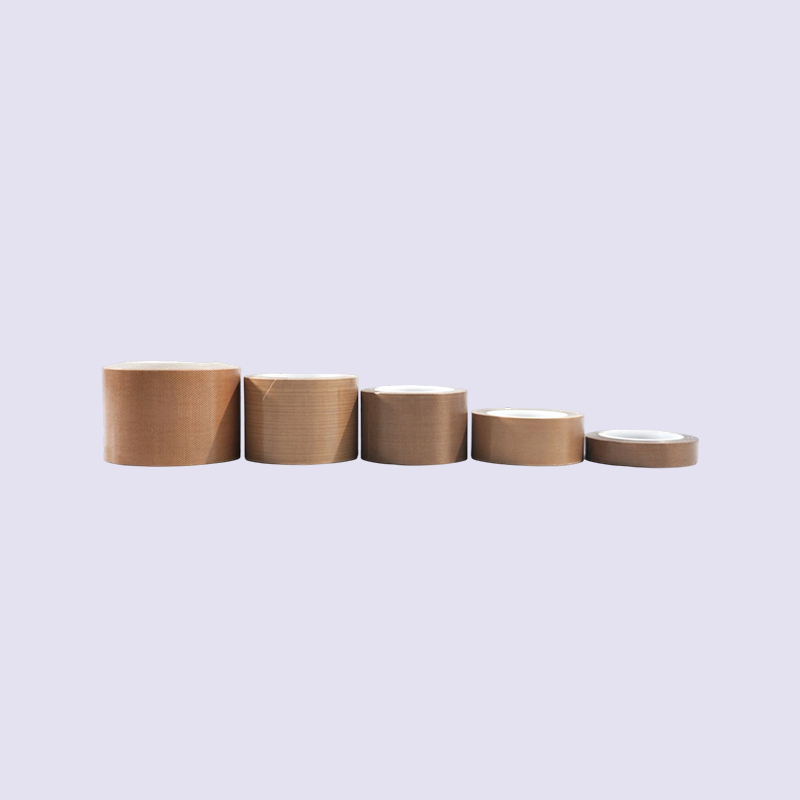
High temperature Teflon tape is a pressure-sensitive adhesive tape manufactured from polytetrafluoroethylene (PTFE) — the fluoropolymer resin commercially known under the DuPont trade name Teflon. Unlike the thread-seal PTFE tape familiar from plumbing applications, high temperature Teflon tape is a thin, film-based product engineered to withstand sustained thermal exposure far beyond the capability of standard adhesive tapes. Depending on the grade and adhesive system, high temperature Teflon tape can operate continuously at temperatures ranging from −73°C to +260°C (−100°F to +500°F), with some specialty grades rated for short-term exposure up to 315°C (600°F).
The tape consists of two functional layers: a PTFE film substrate and a silicone-based adhesive. Silicone adhesive is chosen specifically because it retains its bonding strength and flexibility across the same extreme temperature range as the PTFE film — acrylic and rubber-based adhesives, by contrast, degrade, outgas, or lose tack well below 200°C, making them unsuitable for thermal applications. The combination of PTFE film and silicone adhesive gives high temperature Teflon tape a unique performance profile: it does not melt, it does not char, it does not release toxic off-gassing at elevated temperatures, and it resists virtually all industrial chemicals, solvents, and oils.
High temperature Teflon tape is available in several standard widths (typically 12 mm, 25 mm, 50 mm, and 100 mm), thicknesses (ranging from 0.08 mm to 0.18 mm for standard grades), and surface finishes. Skived PTFE film — produced by shaving thin layers from a solid PTFE billet — delivers a denser, more uniform substrate with superior dielectric properties. Sintered or cast PTFE film grades are more economical but slightly more porous. For electrical insulation and high-voltage applications, skived film is the preferred specification.
Where High Temperature Teflon Tape Is Used in Practice
The practical applications of high temperature Teflon tape span a wide range of industries, unified by the common requirement for a material that maintains its integrity and function under thermal stress. Understanding these use cases helps clarify why the tape's specific properties — non-stick surface, chemical inertness, dielectric strength, and temperature resistance — matter in each context.
Heat Sealing and Packaging Machinery
One of the highest-volume applications is lining the sealing bars of impulse heat sealers and continuous band sealers used in food packaging, medical packaging, and industrial bag sealing operations. The sealing bar heats rapidly to temperatures between 150°C and 250°C to fuse thermoplastic films. Without a PTFE tape liner on the bar, the molten plastic would adhere directly to the metal bar, causing jams, contamination, and surface damage. High temperature Teflon tape provides a renewable non-stick release surface that protects the bar and ensures clean, consistent seals. Replacement of the tape rather than the sealing bar dramatically reduces maintenance costs in high-throughput packaging operations.
Electrical Insulation and Wire Harnessing
PTFE is one of the best dielectric materials available, with a dielectric strength of approximately 24 kV/mm and a dielectric constant of just 2.1 across a wide frequency range. High temperature Teflon tape is used to insulate wire splices, wrap coil windings, and bundle cable harnesses in applications where the assembly will be exposed to engine heat, proximity to heating elements, or high-voltage environments. Automotive ignition systems, electric motors, transformers, and aerospace wiring harnesses are all typical end uses. The tape's ability to maintain its insulating properties at 200°C+ makes it irreplaceable in these applications — ordinary electrical tape would soften, flow, and short-circuit at a fraction of that temperature.
Industrial Pipe and Duct Wrapping
High temperature Teflon tape is used to wrap steam pipes, exhaust ducting, and heat exchanger surfaces where both thermal insulation and chemical resistance are required. In chemical processing plants, PTFE tape protects pipe joints and flanges from corrosive vapours while tolerating the thermal cycling that would crack or debond conventional tapes. In the food and pharmaceutical industries, PTFE tape is used on processing equipment surfaces that contact product, because the material is FDA-compliant and does not contaminate food or pharmaceutical outputs even at elevated temperatures.
3D Printing and Composite Manufacturing
In FDM 3D printing, high temperature PTFE tape is applied to heated print beds to improve adhesion of the first layer while enabling easy part removal after cooling. In composite layup, PTFE release tape is used between the part and the mould or caul plate to prevent resin adhesion during autoclave curing cycles that routinely reach 180°C at elevated pressure. The tape's zero-permeability to most resins and its dimensional stability under thermal and mechanical load make it a standard consumable in aerospace composite fabrication.
Is Mylar Tape Conductive? The Direct Answer
This is one of the most frequently misunderstood questions in tape selection, and the answer depends entirely on which type of Mylar tape you are referring to. Mylar is a trade name (originally owned by DuPont, now by Dupont Teijin Films) for biaxially oriented polyethylene terephthalate (BoPET) film. In its base form — a clear or translucent PET film — Mylar is an excellent electrical insulator, not a conductor. Standard Mylar tape (a BoPET film with an adhesive backing) has a dielectric strength comparable to other polymer films and will not conduct electricity.
However, the confusion arises because Mylar tape is also manufactured in a metallised variant, in which a thin layer of aluminium — typically 400–1000 angstroms thick — is vacuum-deposited onto the film surface. This metallised Mylar tape is a moderately effective electrical conductor on its metallised face. It is this variant that is widely used in electronics for EMI (electromagnetic interference) shielding, RF shielding in cable assemblies, and as a reflective moisture barrier in building insulation. The aluminium layer is thin enough that its conductivity is significantly lower than solid aluminium foil, but it provides adequate shielding effectiveness for most EMI control applications.
The critical practical point is that the adhesive side of metallised Mylar tape is almost always non-conductive, even when the film face is metallised. Most metallised Mylar tapes use an acrylic or polyester adhesive that does not contain conductive particles, meaning the tape will not form an electrically continuous ground path through its adhesive layer. If your application requires conductive bonding — grounding a shield to a chassis, for example — you need either a conductive adhesive tape (typically carbon or silver-loaded) or a tape where the conductive layer is accessible on the bonding face, such as copper foil tape with conductive adhesive.
Mylar Tape Variants and Their Electrical Properties
Understanding the specific electrical behaviour of different Mylar tape products requires distinguishing between the film substrate, the metallisation, and the adhesive — each of which contributes independently to the tape's overall electrical profile. The table below summarises the key variants:
| Mylar Tape Type | Film Conductive? | Adhesive Conductive? | Typical Use |
|---|---|---|---|
| Clear BoPET (standard Mylar) | No | No | Electrical insulation, splicing, masking |
| Metallised Mylar (Al-coated, non-conductive adhesive) | Yes (film face only) | No | EMI shielding wrap, cable shielding |
| Metallised Mylar (conductive adhesive) | Yes | Yes | Grounding, through-tape electrical continuity |
| Antistatic Mylar tape | Partially (dissipative) | Partially | ESD-sensitive electronics packaging |
When specifying Mylar tape for any electrically sensitive application, always request the manufacturer's datasheet confirming the surface resistivity of both the film and the adhesive, and verify whether the tape has been tested to EMI shielding effectiveness standards (such as MIL-DTL-83528 or ASTM D4935) if shielding performance is a design requirement.
Temperature Limits: Teflon Tape vs Mylar Tape Compared
One of the most practically important distinctions between high temperature Teflon tape and Mylar tape is their respective thermal performance — and the gap is significant. Understanding this difference prevents costly failures when tape selection is made without considering the operating environment.
- High temperature PTFE (Teflon) tape: Continuous service rating of 200–260°C (392–500°F). Short-term excursion tolerance up to 315°C. The PTFE film itself does not melt below 327°C, and the silicone adhesive retains bonding strength across the full service range. Suitable for direct contact with heating elements, sealing bars, exhaust surfaces, and autoclave environments.
- Standard Mylar (BoPET) tape: Maximum continuous service temperature of approximately 150°C (302°F). The PET film softens and begins to deform above this threshold. Acrylic adhesives used on most Mylar tapes begin to lose tack at 100–120°C and degrade rapidly above 150°C. Mylar tape is not suitable for direct high-heat applications.
- Metallised Mylar tape: The aluminium coating does not affect the thermal ceiling of the base film. Metallised Mylar tape shares the same 150°C continuous service limit as standard Mylar. For high-temperature EMI shielding applications above 150°C, aluminised PTFE tape or copper foil tape with high-temperature adhesive is required instead.
This thermal gap means that Mylar tape and Teflon tape serve fundamentally different roles in demanding environments. Mylar tape is appropriate for ambient-to-moderate temperature electrical insulation, shielding, and packaging applications. High temperature Teflon tape is the correct choice wherever the tape will be exposed to sustained heat above 150°C — using Mylar tape in these conditions will result in adhesive failure, film shrinkage, or delamination, potentially damaging the underlying equipment or creating a safety hazard.
Selecting Between High Temperature Teflon Tape and Mylar Tape
Choosing the right tape requires matching the product's performance profile to your application's specific demands. Use the following criteria to guide your selection:
- Operating temperature above 150°C: Always select high temperature PTFE tape. No variant of Mylar tape is suitable for sustained thermal exposure above this threshold.
- EMI or RF shielding at ambient temperatures: Metallised Mylar tape is cost-effective and widely available. Confirm whether your application requires through-tape electrical continuity — if so, specify a conductive adhesive variant.
- Electrical insulation in high-heat environments: High temperature PTFE tape is the correct choice. Its dielectric strength of 24 kV/mm and 260°C service rating address both requirements simultaneously.
- Non-stick release surface on packaging or forming equipment: High temperature PTFE tape is the industry standard. Mylar tape will adhere to molten thermoplastics and cannot serve this function.
- Cost-sensitive, low-temperature electrical insulation or bundling: Standard Mylar tape provides excellent dielectric performance at significantly lower cost than PTFE tape for applications that do not involve elevated temperatures or chemical exposure.
- Chemical resistance required: PTFE tape resists virtually all industrial chemicals. Mylar (PET) tape has moderate chemical resistance but is attacked by strong acids, bases, and many organic solvents. In chemically aggressive environments, PTFE tape is the safer specification.
Both high temperature Teflon tape and Mylar tape are specialist products with well-defined performance envelopes. Misapplying either — particularly using Mylar tape in a high-temperature context, or overlooking the non-conductive adhesive limitation of standard metallised Mylar — is a common source of field failures that could be entirely avoided with careful upfront specification. When the application involves any combination of elevated heat, dielectric requirements, and chemical exposure, high temperature PTFE tape is the more robust and reliable choice.


Copyright © Jiangsu Bocheng New Tech Materials Co., Ltd. All Rights Reserved. Silicone PTFE Composite Material Solutions
