
 Language
  English
 Español
Silicone Coated Fiberglass Fabric: Properties & Applications
News-Silicone coated fiberglass fabric is a high-performance composite material that combines the structural integrity and dimensional stability of woven fiberglass with the thermal resistance, flexibility, and chemical inertness of silicone rubber. The result is a fabric that outperforms either material alone in demanding applications — it maintains its mechanical properties at temperatures that would destroy polymer fabrics, retains flexibility at temperatures that would cause fiberglass alone to become brittle or lose weave integrity, and resists a broad range of chemicals, oils, and moisture that would degrade uncoated glass fiber. From industrial welding blankets and expansion joints to fire curtains, removable pipe insulation, and aerospace thermal protection, silicone coated fiberglass fabric is specified wherever thermal protection, flexibility, and long-term durability must coexist in a single material. This guide examines the material in practical depth — how it is made, what its key properties are, how different grades compare, and how to select the right specification for a given application.
How Silicone Coated Fiberglass Fabric Is Manufactured
The manufacturing process for silicone coated fiberglass fabric begins with the base textile — a woven fiberglass fabric produced from E-glass or high-silica glass yarns. E-glass is the most common base fabric material, offering a combination of tensile strength, heat resistance (continuous service to approximately 550°C), and chemical resistance suitable for the majority of industrial applications. High-silica glass (silica content above 96%) is used for base fabrics in extreme-temperature applications where E-glass's softening point is approached, providing continuous service capability to 900°C or beyond.
The weave structure of the base fabric — plain weave, twill weave, or satin weave — determines the fabric's mechanical properties, conformability, and surface texture before coating. Plain weave fabrics have equal strength in warp and weft directions and good dimensional stability. Satin weave fabrics have a smoother surface with more yarns running in one direction, providing better drape and conformability for applications requiring the fabric to form around curved surfaces or complex geometries. Twill weave offers an intermediate combination of mechanical balance and drape.
The silicone rubber compound is applied to the base fabric by calendering, knife-over-roll coating, or dip coating, with the specific method determined by the required coating weight, penetration depth, and surface quality. In calendering, the fabric passes between heated rollers that press the silicone compound into the weave and onto both surfaces simultaneously. Knife-over-roll coating applies the silicone compound to one surface at a time with a controlled gap between the knife blade and the roller, providing precise control over coating weight and surface smoothness. After coating, the fabric passes through a curing oven where the silicone compound is vulcanized (cross-linked) at elevated temperature, converting it from a viscous compound to a stable, elastic rubber that is permanently bonded to the fiberglass substrate.
The total weight of the finished silicone coated fiberglass fabric — expressed in grams per square meter (gsm) or ounces per square yard — reflects the combined weight of the glass fiber substrate and the silicone coating. Standard commercial grades range from approximately 400 gsm (lightweight, flexible grades for curtain and blanket applications) to over 1,500 gsm (heavy-duty grades for expansion joints, industrial seals, and high-temperature insulation covers). The silicone coating may be applied to one side only (single-coated) or to both sides (double-coated), with double-coated fabrics providing better protection against fluid penetration and abrasion from both faces.
Key Physical and Thermal Properties
The performance profile of silicone coated fiberglass fabric is defined by a set of physical and thermal properties that must be understood in combination — a fabric's suitability for an application depends on all these properties simultaneously, not just the temperature rating in isolation.
| Property | Typical Value / Range | Test Standard |
| Continuous service temperature | −60°C to +230°C (standard silicone) | UL 94, ASTM E84 |
| Intermittent peak temperature | Up to +260°C (brief exposure) | — |
| Tensile strength (warp) | 1,500 – 4,500 N/5 cm | ISO 1421 / ASTM D751 |
| Tear resistance | 150 – 500 N | ASTM D751 (tongue tear) |
| Fabric weight | 400 – 1,500+ gsm | ISO 2286-2 |
| Cold flexibility | No cracking at −60°C | ASTM D2136 |
| Flame resistance | Self-extinguishing (UL 94 V-0 rated grades available) | UL 94, EN 13501 |
| Dielectric strength | 10 – 25 kV/mm | ASTM D149 |
The combination of a −60°C cold flexibility limit and a +230°C continuous service temperature is particularly significant — it means that silicone coated fiberglass fabric can be used in outdoor applications and cryogenic adjacent environments without the coating becoming brittle and cracking, while also withstanding the elevated temperatures encountered in industrial process environments. This wide service temperature window, spanning nearly 300 degrees, is one of the material's most distinctive competitive advantages over alternative coated fabrics such as PTFE-coated fiberglass (excellent at high temperatures but less flexible at low temperatures) and neoprene-coated fiberglass (good flexibility but lower maximum temperature).
Silicone Coating Color, Thickness, and Grade Variants
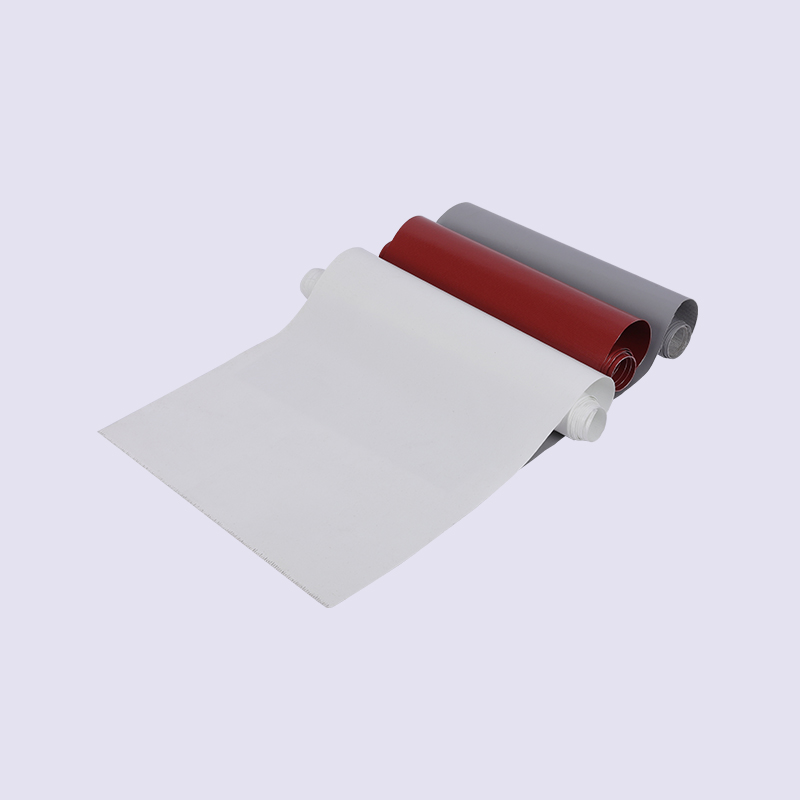
Silicone coated fiberglass fabric is produced in several color variants that reflect differences in silicone compound formulation rather than purely cosmetic choices. Red silicone coating — the most immediately recognizable variant — uses a red-pigmented silicone compound that in many formulations provides slightly enhanced heat resistance compared to the natural (translucent/white) or gray silicone variants. However, color alone does not define performance: the specific silicone formulation, coating weight, and base fabric weight are the determinants of performance, and color should not be used as a proxy for quality or temperature rating.
Gray silicone coated fiberglass fabric is a widely used general-purpose grade that provides good temperature resistance and flexibility at moderate cost. It is the most common choice for welding blankets, removable insulation covers, and general industrial applications. White or natural silicone coated fiberglass is used where cleanliness, food contact compliance, or visual inspection of the fabric surface is important — the lighter color makes contamination more visible. Black silicone coating provides good UV resistance for outdoor applications and is used in solar shading, architectural expansion joints, and outdoor thermal protection systems.
Single-Coated vs. Double-Coated Grades
Single-coated silicone fiberglass fabric has silicone applied to one face only, leaving the opposite face with the texture of the raw fiberglass weave. This construction is used when the coated face needs to contact a hot surface or provide chemical resistance, while the uncoated face benefits from the higher friction coefficient of raw glass fiber for secure positioning without slipping. Double-coated fabric — with silicone applied to both faces — provides uniform protection from both sides, better resistance to fluid penetration through the fabric thickness, and a more consistent appearance. Double-coated grades are standard for expansion joints, fire curtains, and applications where both faces are exposed to the process environment.
Primary Industrial Applications and Why Silicone Coated Fiberglass Excels
The unique combination of properties in silicone coated fiberglass fabric makes it the material of choice for a specific set of industrial applications where no single alternative material satisfactorily meets all requirements simultaneously.
Industrial Expansion Joints
Fabric expansion joints — flexible connectors installed in ductwork, flue gas systems, and process gas pipework to absorb thermal expansion and vibration — are one of the most technically demanding applications for silicone coated fiberglass fabric. The expansion joint fabric must withstand continuous exposure to hot process gases (often 150–250°C), resist chemical attack from combustion products including sulfur dioxide, nitrogen oxides, and moisture, maintain flexibility through millions of thermal expansion cycles, and retain gas-tight integrity to prevent emission leakage. Double-coated silicone fiberglass in weights of 800–1,500 gsm is the standard specification for industrial expansion joints in power generation, cement production, steel manufacturing, and waste-to-energy plants. Multiple layers of fabric are typically laminated together to achieve the required gas impermeability and mechanical strength.
Welding Blankets and Fire Protection Curtains
Welding blankets made from silicone coated fiberglass fabric protect adjacent equipment, surfaces, and personnel from welding spatter, sparks, and radiant heat during hot work operations. The silicone coating provides a smooth surface that prevents weld spatter from adhering and burning through the fabric, while the fiberglass base provides the structural integrity to withstand the mechanical handling of a reusable industrial blanket. Standard welding blanket grades use 400–600 gsm silicone coated fiberglass in widths and lengths suited to covering pipes, equipment, and deck areas during maintenance operations. Fire curtains in industrial facilities — barriers deployed to contain fire and smoke within a defined zone during an emergency — use heavier-weight silicone coated fiberglass (600–1,000 gsm) rated to European standard EN 16034 or equivalent national fire curtain standards.
Removable Insulation Covers and Jackets
Removable insulation covers for valves, flanges, pipe fittings, and equipment are fabricated from silicone coated fiberglass fabric as the outer shell, filled with a fibrous insulation core of ceramic fiber, glass wool, or mineral wool, and fastened with stainless steel straps or hook-and-loop closures. The silicone coated outer shell protects the insulation core from mechanical damage, moisture, and process fluid contamination, while the flexibility of the silicone coated fiberglass allows the cover to be fitted and removed repeatedly without tearing or deforming. Removable insulation covers allow access to flanges, valves, and instrumentation for maintenance without destroying the insulation, providing significant cost savings compared to rigid pipe insulation in maintenance-intensive facilities.
Aerospace and High-Temperature Sealing
In aerospace ground support equipment, engine test cells, and military vehicle applications, silicone coated fiberglass fabric is used for thermal protection blankets, exhaust duct insulation, and flexible sealing elements where the combination of high-temperature resistance, light weight, and flexibility is critical. For these applications, premium grades using high-silica base fabrics and platinum-cured silicone compounds — which offer lower volatile content and better outgassing performance than peroxide-cured grades — are specified. The dimensional stability of fiberglass under thermal cycling is particularly valued in aerospace sealing applications where consistent seal geometry must be maintained across wide temperature swings.
Selecting the Right Silicone Coated Fiberglass Fabric Grade
Matching the fabric specification to the application requirements involves evaluating several parameters simultaneously. The following practical criteria guide the selection process:
- Define the continuous and peak service temperature: Confirm the maximum continuous operating temperature the fabric will experience, and any short-duration peak temperatures during process upsets or maintenance. Standard silicone coated E-glass covers most applications up to 230°C continuous. For temperatures above 230°C continuous or peak exposures above 260°C, specify high-temperature silicone compounds or high-silica base fabrics.
- Specify coating weight based on mechanical and barrier requirements: Lightweight grades (400–600 gsm) suit applications where flexibility and drape are priorities — welding blankets, fire curtains, and removable covers. Medium grades (600–900 gsm) provide the balance of mechanical strength and flexibility needed for expansion joints and industrial curtains. Heavy grades (900–1,500+ gsm) are used where maximum mechanical strength, pressure resistance, or gas impermeability is required.
- Confirm chemical exposure compatibility: Silicone has good resistance to most dilute acids, alkalis, water, steam, and aliphatic hydrocarbons, but is attacked by concentrated acids, aromatic solvents (toluene, xylene), and chlorinated solvents. If the fabric will be exposed to specific chemicals, request immersion test data from the supplier confirming compatibility at the relevant concentration and temperature.
- Verify fire classification requirements: Applications in buildings, tunnels, and occupied spaces may require fabric with a defined fire reaction classification under EN 13501-1 (European) or NFPA standards (North American). Specify the required fire classification explicitly and request the relevant test certificate from the supplier — do not assume that any silicone coated fiberglass fabric meets fire performance requirements without certification.
- Request material certification and test reports: For critical applications — expansion joints in power plants, fire curtains in occupied buildings, insulation in aerospace systems — material certification traceable to the production batch should accompany each delivery. At minimum, request tensile strength, weight, and temperature rating data from the supplier's quality management system, tested to the relevant ASTM or ISO standards.


Copyright © Jiangsu Bocheng New Tech Materials Co., Ltd. All Rights Reserved. Silicone PTFE Composite Material Solutions
