
 Language
  English
 Español
How Do You Choose the Right PTFE Fabric for Your Specific Project Needs?
News-What Is PTFE Fabric and Why Does the Right Choice Matter
PTFE fabric — polytetrafluoroethylene fabric — is a high-performance technical textile created by coating or laminating a woven fiberglass or other base fabric with PTFE resin. The result is a material that combines the structural integrity of the woven substrate with the extraordinary chemical and thermal properties of PTFE: near-universal chemical resistance, a working temperature range from -70°C to over 260°C, an extremely low coefficient of friction, and a non-stick surface that repels virtually all substances. These characteristics have made PTFE fabric indispensable across industries ranging from food processing and packaging to industrial filtration, aerospace, architecture, and medical device manufacturing.
However, PTFE fabric is not a single product — it is a family of materials that differ significantly in base fabric construction, PTFE coating weight, surface finish, thickness, and dimensional form. Choosing the wrong variant for your application can result in premature failure, inadequate performance, or unnecessary expense. A fabric specified for light-duty conveyor belt use will not survive the chemical immersion demands of industrial filtration, just as an ultra-heavy industrial grade is wasteful overkill for a food packaging application. This guide breaks down the key selection criteria so you can identify the PTFE fabric that genuinely fits your project requirements.
Understanding the Different Types of PTFE Fabric
Before evaluating specific properties, it helps to understand the main structural categories of PTFE fabric available on the market. Each type has a distinct construction method that shapes its performance profile and suitability for different applications.
PTFE-Coated Fiberglass Fabric
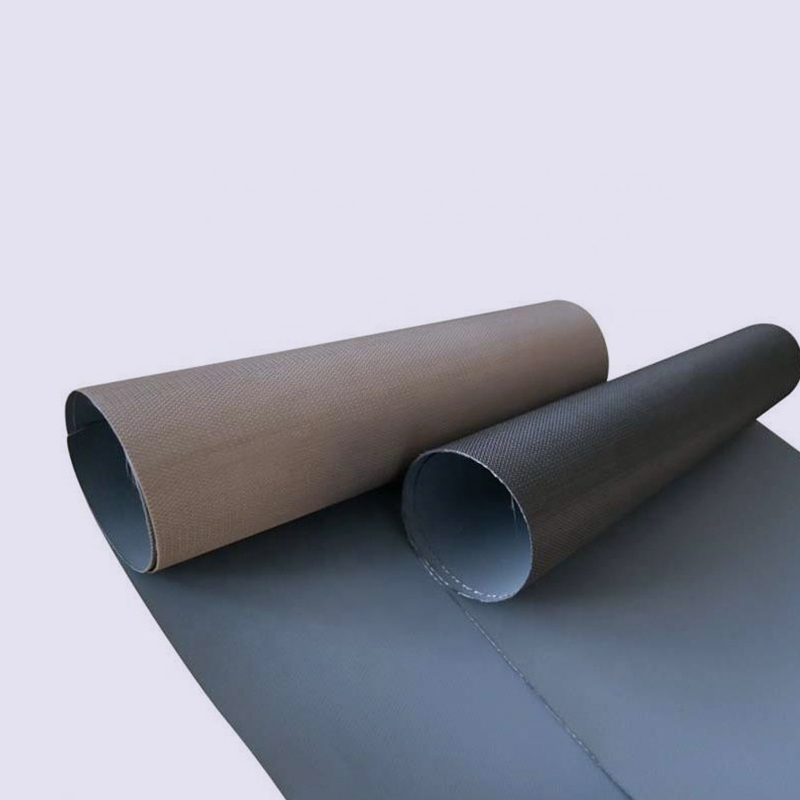
This is the most widely used form of PTFE fabric. A woven fiberglass cloth is impregnated and coated with multiple layers of PTFE dispersion, then sintered at high temperature to fuse the coating into a continuous, pinhole-free film. The fiberglass substrate provides tensile strength and dimensional stability, while the PTFE coating delivers chemical resistance, non-stick properties, and thermal performance. This type is the standard choice for conveyor belts, release sheets, heat sealing applications, and architectural membranes. It is available in a wide range of weights and thicknesses, and its properties are well-documented across international standards.
Expanded PTFE (ePTFE) Membrane Fabric
Expanded PTFE is produced by stretching sintered PTFE at controlled rates to create a microporous node-and-fibril structure. When laminated to a woven or nonwoven substrate, it forms a breathable membrane that blocks liquid water while allowing water vapor to pass through. This is the technology used in high-performance outdoor clothing, medical textiles, and certain filtration applications. ePTFE membrane fabrics have a very different performance profile from coated fiberglass — they prioritize breathability, flexibility, and fine particulate filtration rather than heat resistance and non-stick surface performance.
PTFE-Coated Aramid and Other Substrates
In applications requiring extreme mechanical strength alongside PTFE's chemical and thermal properties, aramid fiber (Kevlar) or carbon fiber substrates may be used instead of fiberglass. These specialty constructions are significantly more expensive and are used in demanding industrial environments such as high-pressure sealing, aerospace components, and chemical processing equipment where standard fiberglass-based fabrics would lack sufficient tensile or abrasion resistance.
Key Properties to Evaluate When Selecting PTFE Fabric
Once you have identified the structural type that fits your application category, the next step is to evaluate specific material properties against your project's operating requirements. The following parameters are the most critical selection criteria for the majority of PTFE fabric applications.
Temperature Rating
PTFE fabric's thermal performance depends on both the PTFE coating and the underlying substrate. Standard PTFE-coated fiberglass fabric handles continuous operating temperatures up to 260°C, with short-term excursions to 290°C in some grades. However, the fiberglass substrate begins to lose tensile strength above 230°C in prolonged exposure. For applications that cycle repeatedly through high temperatures — such as industrial ovens, heat sealing jaws, or dryer belts — choose fabrics explicitly rated for continuous use at your peak operating temperature with a safety margin of at least 10–15%. For cryogenic or low-temperature applications, verify the fabric's minimum rated temperature, as some adhesive-bonded constructions may delaminate at very low temperatures even if the PTFE itself remains flexible.
Thickness and Weight
Thickness and fabric weight (measured in grams per square meter, or GSM) are directly related to the fabric's mechanical durability, the total PTFE coating content, and its flexibility. Thinner, lighter fabrics offer better conformability around rollers and curved surfaces and are easier to fabricate into complex shapes. Heavier fabrics provide greater tear resistance, longer service life under abrasion, and better dimensional stability under tension. For reference, common PTFE fabric weights range from approximately 200 GSM (lightweight release sheet applications) to over 1,500 GSM (heavy industrial conveyor belts and structural membranes).
PTFE Coating Content and Coverage
The percentage of PTFE by weight in the finished fabric — and whether the coating is continuous and pinhole-free — significantly affects chemical resistance, non-stick performance, and moisture barrier properties. High coating content fabrics (60–70% PTFE by weight) are required for aggressive chemical environments and applications where liquid impermeability is essential. Lower coating content fabrics offer adequate surface release properties at lower cost and weight, suitable for food contact and general industrial release applications. Always request the manufacturer's data sheet specifying coating content, not just overall fabric weight.
Matching PTFE Fabric to Specific Application Requirements
The practical selection of PTFE fabric becomes clearer when application requirements are mapped against specific fabric properties. The table below summarizes recommended fabric characteristics for the most common application categories:
| Application | Recommended Type | Key Property Priority | Typical Weight Range |
| Food conveyor belts | PTFE-coated fiberglass | FDA compliance, non-stick, abrasion resistance | 600–1,200 GSM |
| Heat sealing / packaging | PTFE-coated fiberglass | Dimensional stability, release, thermal cycling | 200–600 GSM |
| Industrial filtration | ePTFE membrane laminate | Pore size, chemical resistance, cake release | 300–800 GSM |
| Architectural membranes | Heavy PTFE-coated fiberglass | UV resistance, tensile strength, self-cleaning | 800–1,500+ GSM |
| Outdoor / protective apparel | ePTFE membrane laminate | Breathability, waterproofness, flexibility | 150–400 GSM |
| Chemical processing | High-coating PTFE fiberglass or aramid | Chemical impermeability, temperature resistance | 800–1,500 GSM |
Surface Finish and Its Effect on Performance
The surface finish of PTFE fabric affects its friction coefficient, release properties, printability, and bonding behavior. Most PTFE-coated fiberglass fabrics are available in two primary surface finishes: smooth (calendered) and open-weave (un-calendered). Understanding which finish suits your application prevents costly specification errors.
- Smooth / Calendered Surface: The fabric passes through heated calendar rolls that compress and flatten the surface, creating a uniform, low-porosity finish with an extremely low friction coefficient. This finish maximizes non-stick performance and is ideal for direct product contact applications like food release sheets, packaging machine guide surfaces, and press pads. It also provides better liquid barrier properties.
- Open Weave / Mesh Construction: The weave pattern remains visible, and the fabric has a more open structure that allows air, steam, and liquids to pass through. This finish is essential for drying belt applications in food processing, paper manufacturing, and textile drying, where airflow through the belt is required for the process to function. Open mesh fabrics are also used in screen printing and industrial drying ovens.
- Textured / Embossed Surface: Some specialty PTFE fabrics are produced with a deliberate surface texture to improve grip, reduce marking on delicate substrates, or create specific aesthetic effects in architectural applications. These are less common but available from specialized manufacturers for custom requirements.
Regulatory Compliance and Certification Requirements
Many PTFE fabric applications operate in regulated environments where material compliance is mandatory, not optional. Food contact applications require FDA compliance (21 CFR) in the United States or EU Regulation 10/2011 in Europe, confirming that the fabric does not transfer harmful substances to food products. Medical device applications require biocompatibility testing per ISO 10993. Industrial applications in certain chemical sectors may require compliance with REACH regulations regarding restricted substances. Always request the relevant compliance documentation from your supplier before finalizing a specification — reputable PTFE fabric manufacturers maintain comprehensive compliance records for their product ranges and can provide certificates of conformity for specific regulations upon request.
Fire resistance is another certification area that is mandatory in architectural membrane applications and strongly recommended for industrial conveyor systems. Look for fabrics tested to standards such as EN 13501 (Europe) or ASTM E84 (USA) for flame spread and smoke development. PTFE itself is inherently flame-retardant and does not sustain combustion, but the fiberglass substrate and any adhesive layers used in seam construction must also be verified for fire performance in safety-critical installations.
Practical Tips for Finalizing Your PTFE Fabric Selection
After working through the technical selection criteria, several practical steps will help confirm that your chosen PTFE fabric will perform as expected in real-world conditions before committing to full production quantities.
- Request Material Data Sheets: A comprehensive technical data sheet from the manufacturer should include tensile strength, elongation, coating weight, maximum operating temperature, chemical resistance data, and surface energy values. Do not rely solely on product names or general grade descriptions — verify the actual measured values.
- Order Sample Material for Testing: Before specifying a fabric for production use, obtain samples and test them under your actual operating conditions — including the chemicals, temperatures, mechanical stresses, and cycle frequencies your application involves. Laboratory data is a guide, but real-world testing in your specific environment is the ultimate validation.
- Evaluate Fabrication Requirements: Consider how the fabric will need to be cut, joined, and installed. PTFE fabric can be cut with scissors, rotary cutters, or laser cutting equipment. Seams and joints in belt applications require heat welding or mechanical fastening — confirm that your chosen fabric is compatible with the joining method you plan to use.
- Consider Total Cost of Ownership: A more expensive, higher-specification fabric that lasts three times longer under your operating conditions will typically deliver a lower total cost of ownership than a cheaper option that requires frequent replacement and causes production downtime. Calculate cost per hour of service life rather than cost per square meter when comparing options.
- Confirm Supply Continuity: For production applications, ensure that your chosen fabric grade is available in consistent supply from your supplier. Some specialty constructions are produced in limited batch quantities — confirming ongoing availability before integrating a fabric into a production process avoids future disruption if the product is discontinued or lead times become unpredictable.


Copyright © Jiangsu Bocheng New Tech Materials Co., Ltd. All Rights Reserved. Silicone PTFE Composite Material Solutions
