
 Language
  English
 Español
Differences in BBQ Grill Mats by Material: Understanding Your Options
News-Why Material Matters in BBQ Grill Mats
Not all BBQ grill mats are created equal, and the material they're made from is the single most important factor determining how they perform under heat, how long they last, and whether they're safe to use with your food. When you're cooking at high temperatures, the wrong material can warp, release toxic fumes, or simply break down after a few uses. Understanding what each material offers helps you make a smarter investment and get consistently better results on the grill.
High-temperature resistant BBQ grill mats have become a staple for backyard cooks who want to prevent food from falling through grill grates, reduce flare-ups, and make cleanup easier. But the range of available materials — from PTFE-coated fiberglass to copper-infused mesh — can be confusing. This guide breaks down each option so you know exactly what you're getting before you buy.
PTFE-Coated Fiberglass Mats
PTFE, or polytetrafluoroethylene, is the most common material used in high-quality BBQ grill mats. It's the same non-stick compound found in premium cookware. When applied as a coating over a woven fiberglass base, it creates a mat that is both structurally rigid and impressively heat resistant. Most PTFE-coated mats can handle temperatures between 260°C and 288°C (500°F to 550°F), making them well-suited for gas, charcoal, and electric grills.
The fiberglass weave beneath the PTFE coating provides the structural backbone. This combination results in a mat that lies flat, resists tearing, and maintains its shape even after repeated high-heat exposure. The non-stick surface means food releases cleanly without sticking, and cleanup requires nothing more than a wipe with a damp cloth or a quick rinse.
Key Advantages
- Excellent non-stick performance even without added oil
- Reusable and dishwasher-safe in most cases
- Handles temperatures up to 550°F safely
- FDA-approved materials used in food-safe versions
Limitations to Know
- Exceeding the maximum temperature threshold can degrade the coating
- Metal utensils can scratch and damage the surface over time
- PTFE mats are not suitable for use directly over open flames
Copper-Infused Grill Mats
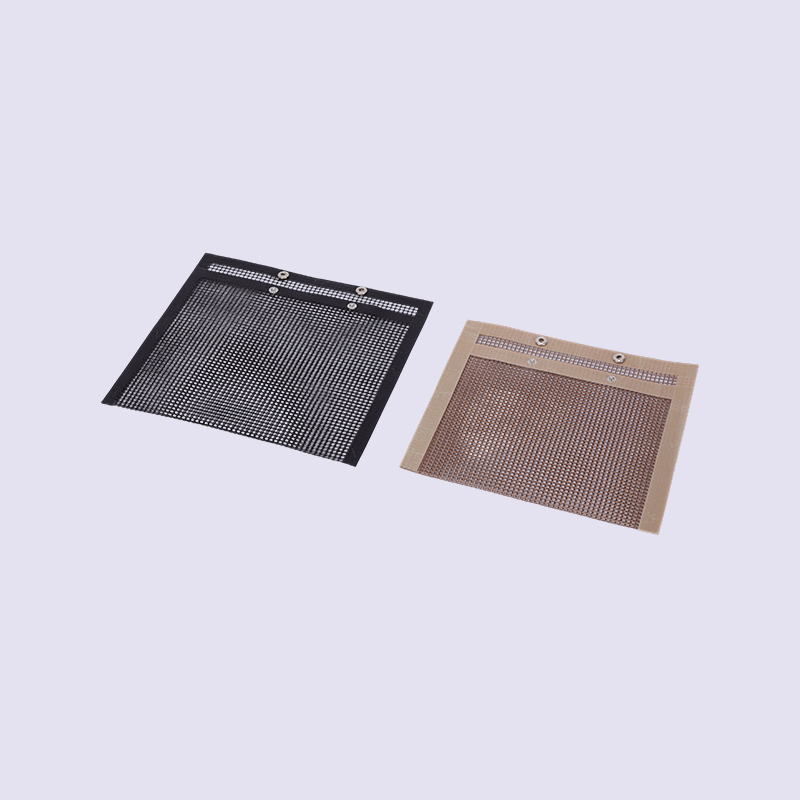
Copper-infused grill mats are a newer category that has gained significant popularity due to aggressive marketing claims. These mats typically consist of a PTFE or similar polymer base infused or layered with copper-colored fibers or particles. The copper component is primarily cosmetic or intended to improve heat conductivity, though the actual copper content in most consumer products is minimal.
Despite the marketing hype, copper-infused mats perform similarly to standard PTFE-coated mats in most real-world grilling conditions. They offer comparable heat resistance, usually up to around 260°C (500°F), and similar non-stick properties. Where they do tend to differ is in aesthetic appeal — the copper color stands out, and some users find the mats conduct heat slightly more evenly across the surface.
When Copper Makes Sense
If you're cooking foods that benefit from even heat distribution — like eggs, pancakes, or thin fish fillets — a copper-infused mat may offer a marginal advantage. For most standard grilling tasks like burgers, vegetables, and chicken, you're unlikely to notice a meaningful difference compared to a quality PTFE-only mat. Price points for copper-infused mats tend to be higher, so weigh the actual performance benefit against the added cost before purchasing.
Silicone Grill Mats
Silicone grill mats occupy a different niche compared to PTFE options. Food-grade silicone is flexible, highly durable, and naturally resistant to heat, with most silicone mats rated between 230°C and 260°C (450°F to 500°F). Silicone doesn't contain synthetic polymer coatings in the same way PTFE does, which appeals to consumers concerned about chemical exposure at high temperatures.
The texture of silicone mats differs noticeably from PTFE mats. They tend to be thicker and more pliable, which makes them easier to roll up for storage but sometimes harder to lay flat on a grill grate. Silicone mats are also extremely durable — they resist cracking, tearing, and surface degradation with proper use. However, they can develop a slight rubbery odor when first heated, which dissipates after a few uses.
Best Use Cases for Silicone
- Ideal for lower to moderate temperature grilling
- Great for baking on outdoor grills due to even heat distribution
- Preferred by those wanting a non-PTFE alternative
- Long lifespan with minimal maintenance
Stainless Steel Mesh Grill Mats
Stainless steel mesh mats are fundamentally different from polymer-based options. Made from woven or perforated stainless steel, these mats are built to endure extreme temperatures — often exceeding 400°C (750°F) — which makes them the go-to option for high-heat searing, charcoal grilling, and wood-fired cooking. They won't warp, melt, or release fumes regardless of how hot your grill gets.
The tradeoff is that stainless steel mats don't offer non-stick properties unless seasoned with oil before use. Food can stick if the surface isn't properly prepared, and cleanup requires more effort — typically a brush and hot water. However, for serious grillers who cook at temperatures that would destroy a PTFE mat, stainless steel is simply the only viable choice.
Comparing Heat Resistance Across Materials
| Material | Max Temp (°F) | Non-Stick | Best For |
| PTFE-Coated Fiberglass | 500–550°F | Yes | General grilling |
| Copper-Infused | 500°F | Yes | Even heat cooking |
| Silicone | 450–500°F | Partial | Moderate heat, baking |
| Stainless Steel Mesh | 750°F+ | No | High-heat searing |
Thickness and Its Impact on Performance
Regardless of material, the thickness of a grill mat significantly affects how it performs. Thicker mats — generally 0.25mm to 0.35mm for PTFE types — retain heat better and are less prone to tearing during handling. Thinner mats heat up faster but may struggle to maintain consistent surface temperatures across the entire cooking area, leading to hot spots that can scorch food unevenly.
For PTFE-coated fiberglass mats, a thickness of at least 0.25mm is recommended for regular use. Mats below this threshold often wear out faster, especially along the edges where grill grate pressure concentrates. Silicone mats tend to be inherently thicker, usually starting around 3mm, which is part of why they're so durable. Stainless steel mesh thickness is measured by wire gauge — lower gauge numbers indicate thicker, stronger wire.
Safety Considerations at High Temperatures
All grill mat materials have upper temperature limits that should never be exceeded. PTFE is stable and non-toxic at normal grilling temperatures, but if heated above 260°C (500°F) for extended periods, it can begin to break down and emit fumes that are harmful to birds and potentially irritating to humans. This is not a risk under normal cooking conditions, but it becomes relevant when mats are left on a preheating grill with no food to absorb the heat.
Silicone is generally considered the safest material from a chemical standpoint, with no known toxic breakdown products within its rated temperature range. Stainless steel presents no chemical risks whatsoever. Always check that any grill mat you purchase is labeled as PFOA-free, since older PTFE manufacturing processes used PFOA (perfluorooctanoic acid), a potentially harmful compound that has since been phased out by reputable manufacturers.
How to Choose the Right Mat for Your Grilling Style
The right mat depends on what and how you cook. If you primarily use a gas or electric grill for everyday items like burgers, fish, and vegetables, a standard PTFE-coated fiberglass mat offers the best balance of performance, convenience, and value. Look for mats that are at least 0.25mm thick, PFOA-free, and rated to at least 500°F.
If you grill over charcoal at high heat or use a wood-fired setup, stainless steel mesh is your best option. It won't be damaged by intense direct heat and will outlast polymer mats by years in those conditions. For those who prefer an alternative to PTFE products for health or environmental reasons, food-grade silicone mats provide reliable performance at moderate temperatures with excellent longevity.
Copper-infused mats are a reasonable choice if you find them at a competitive price and enjoy the aesthetics, but don't pay a significant premium expecting dramatically better results. In most practical grilling situations, the underlying PTFE material does the heavy lifting regardless of the copper content.
Extending the Life of Your Grill Mat
Proper care significantly extends the usable life of any grill mat. For PTFE and copper-infused mats, always use silicone or wooden utensils to avoid scratching the surface. Avoid folding these mats sharply, as repeated creasing can crack the coating. Clean them after each use — either by wiping with a damp cloth or rinsing under warm water — to prevent grease buildup that can degrade the surface over time.
Silicone mats can be scrubbed more aggressively and are typically dishwasher safe. Stainless steel mats should be brushed clean while still warm and occasionally seasoned with a light coat of cooking oil to reduce sticking. Store all mats flat or loosely rolled — never tightly folded — to preserve their shape and coating integrity for as long as possible.


Copyright © Jiangsu Bocheng New Tech Materials Co., Ltd. All Rights Reserved. Silicone PTFE Composite Material Solutions
